Kosovo · Dukagjin
Peja
A city of mountain water, old stone and long coffees — where every corner has a story, and almost every corner has a dog waiting in the sun.
- Albanian / Serbian name
- Pejë · Peć
- Region
- Dukagjin plain, western Kosovo
- Population
- ~96,000 in the municipality
- Elevation
- ~520 m, below the Accursed Mountains
- River
- Lumbardhi i Pejës (Bistrica)
- Nearest peaks
- Rugova Gorge & Bjeshkët e Nemuna
The place
Where the mountains meet the plain
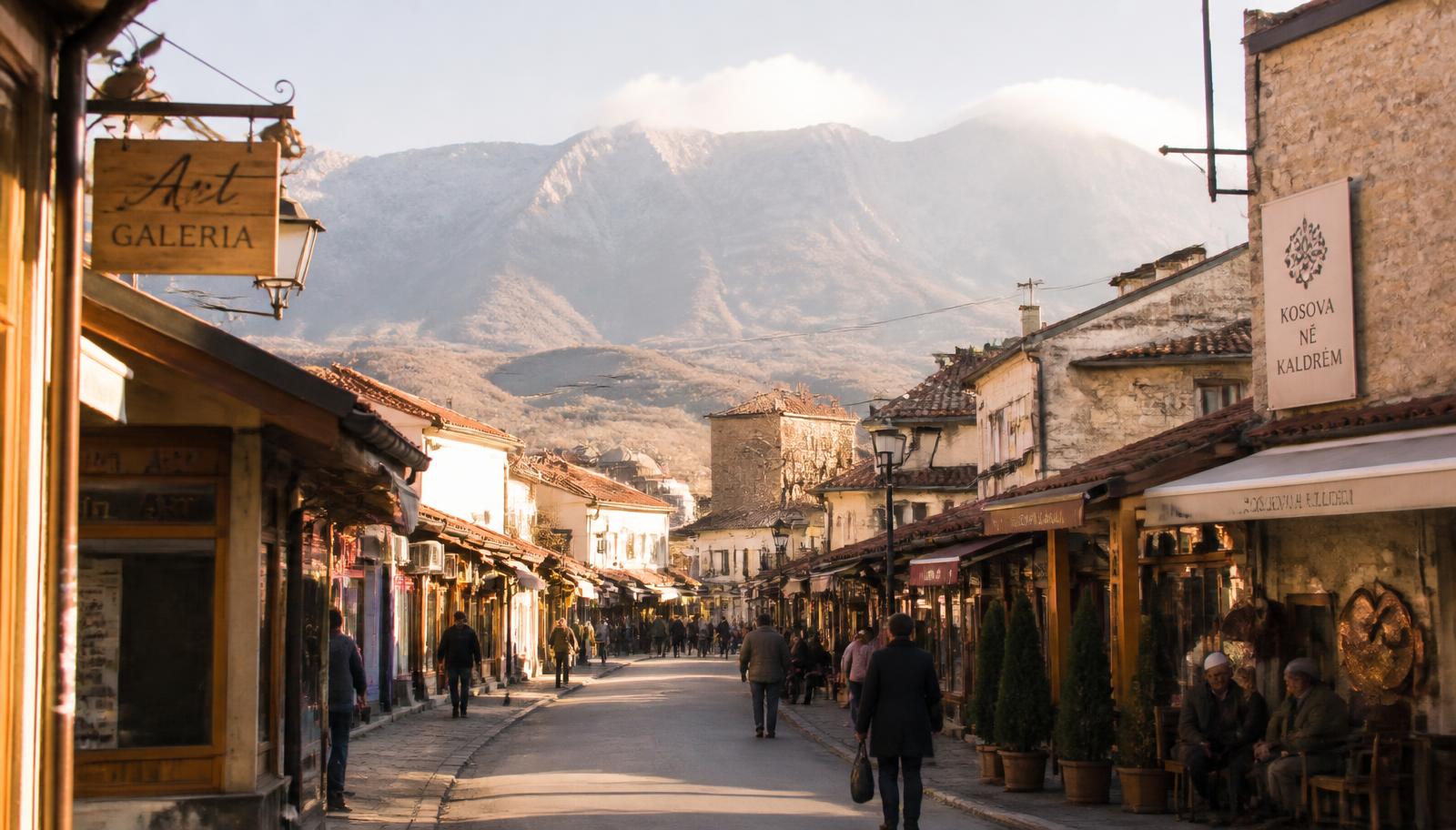
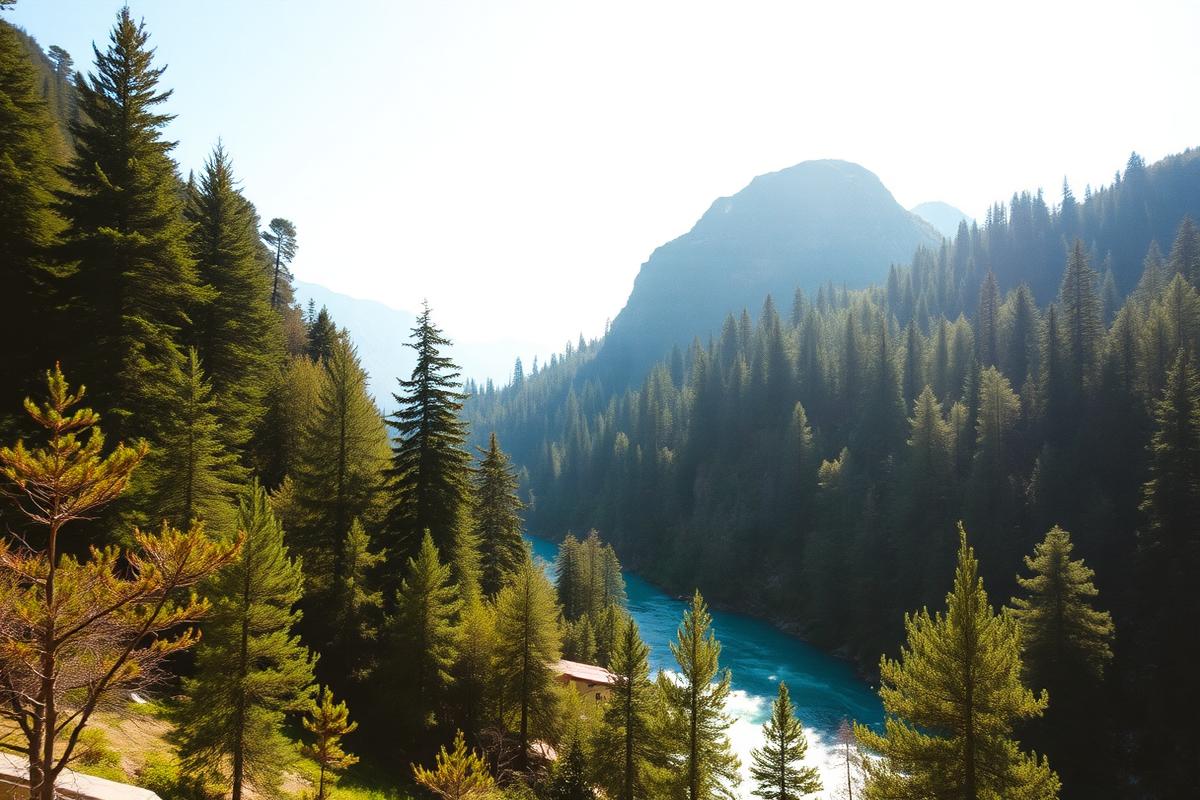
Peja sits at the western edge of Kosovo, right where the flat, generous Dukagjin plain runs into the wall of the Accursed Mountains — Bjeshkët e Nemuna. The city grew up around the Lumbardhi, a river so cold and clear it still shocks your hands in August. That river is the reason Peja exists: it powered mills, watered orchards, and drew traders down out of the highlands.
Walk ten minutes from the centre and the Rugova Gorge opens in front of you — thirty kilometres of limestone cliffs, pine forest and waterfalls. Walk ten minutes the other way and you are in a bazaar where coppersmiths still work by hand. Few cities of this size hold both so easily.
History
Layer upon layer, all still visible
Antiquity. The area was settled in Illyrian and later Roman times; the Roman road station of Siparant(um) is generally placed near today's city, on the route linking the Adriatic coast with the interior of the Balkans. Peja has always been a crossing place rather than an end point.
The medieval centre (13th–14th c.). In 1253 the seat of the Serbian Orthodox archbishopric was moved here, and the Patriarchate of Peć was built at the mouth of the Rugova Gorge. Its four joined churches and their frescoes are today a UNESCO World Heritage site. For centuries this was one of the most important spiritual centres in the region — and it stands, quietly, a short walk from the bus station.
Ottoman Peja (1455–1912). Under Ottoman rule Peja became a busy market town: the Bazaar of Peja, the Bajrakli Mosque (15th c.), hamams, han inns and the Haxhi Zeka Mill — a large water-powered mill complex built by the local notable Haxhi Zeka at the end of the 19th century. In 1899 Haxhi Zeka convened the League of Peja (Lidhja e Pejës), an assembly of Albanian leaders demanding autonomy. That gathering is why Peja carries real weight in Albanian national memory.
The 20th century. Peja passed through the Balkan Wars, both World Wars, and the Yugoslav decades, when tourism in Rugova and industry in the valley — above all the Birra Peja brewery, founded in 1971 — shaped working life. The 1990s brought repression and then war: in 1998–99 much of the old town was burned and a large part of the population displaced. Anyone who remembers that spring remembers streets of roofless houses.
Rebuilding. The bazaar was reconstructed, often stone by stone and photograph by photograph. That reconstruction is the honest backdrop to a stray-dog story: a city that has had to rebuild itself has not always had the room to build systems for animals. It is building them now.
Today
Infrastructure and the shape of the city
Peja is the centre of its own municipality and of the wider Peja district, which also covers Istog, Klina and Junik. The city is reached by road from Prishtina in roughly an hour and a half; the R7 motorway network and upgraded regional roads have made the trip far easier than a decade ago. The nearest airport is Prishtina International, about 90 km east, and Montenegro is a mountain pass away through Rugova and Çakor.
The centre is compact and walkable: bazaar, mosque, riverside promenade, the Peja Museum, and a ring of newer apartment blocks around the older core. Public services — water from the mountain karst, district heating in parts of the town, a regional hospital, the Haxhi Zeka University founded in 2013 — sit alongside familiar strains: uneven waste collection, older electrical infrastructure, traffic and parking pressure in the centre, and construction that sometimes outruns planning.
For dogs, infrastructure is not an abstraction. Where bins are open, dogs eat from them. Where a road is widened, a pack loses its yard. Where a neighbourhood installs a tap, someone leaves a bowl beside it.
Governance
Politics, briefly and plainly
Kosovo declared independence in 2008 and is a parliamentary republic. Peja is governed by a directly elected mayor and a municipal assembly, elected every four years, with real responsibility for local roads, waste, water, schools, urban planning and public health — the exact areas that decide how street animals live.
Kosovo's Law on Veterinary matters and animal-welfare provisions require municipalities to manage stray populations humanely, and the accepted approach across the country is catch–neuter–vaccinate–return, usually delivered in partnership with NGOs. In practice, capacity varies year to year with budgets and political attention. Local pressure works: a shelter contract renewed, a sterilisation campaign funded, a bin lid replaced — these are municipal decisions, and residents can push for them.
Everyday life
Coffee, mountains and long conversations
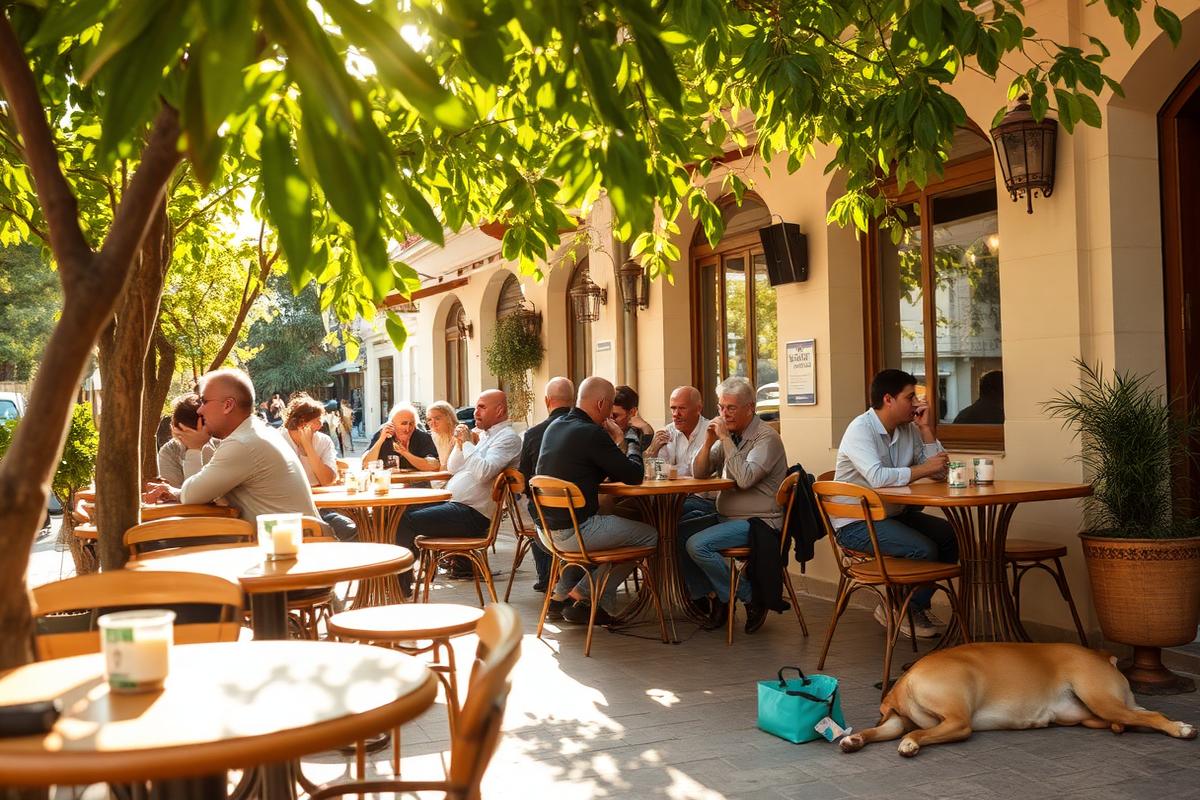
Life in Peja is lived outdoors and unhurried. The macchiato is a social institution; an hour is the minimum. In the evening the whole city walks — the xhiro — up and down the main street, greeting people it has already greeted twice that day. Weekends belong to Rugova: barbecue smoke, cold river water, and families walking to the waterfalls.
The food is plain and very good: flija cooked in layers over embers, byrek in the morning, ajvar jarred in autumn, lamb, honey and mountain cheese from the highland villages. Birra Peja is local pride in a bottle. Households are close, hospitality is near-obligatory, and a stranger at the door is offered coffee before questions.
The economy is a mix of trade, small business, agriculture, the brewery, growing mountain tourism, and — as everywhere in Kosovo — remittances from a large diaspora in Germany, Switzerland and beyond. Young people are many, ambitious and often looking outward; that same generation is the one starting the animal-welfare initiatives.
And the dogs
Peja's other residents
The street dogs of Peja are not intruders in this picture. They sleep outside the bakery that feeds them, they follow schoolchildren to the bridge and no further, they have territories, friendships and clear opinions about motorbikes. Butchers save scraps. Café owners keep a bowl by the door. Someone always knows a dog's name, even when the dog belongs to no one.
What is missing is not kindness — it is a system: consistent sterilisation, vaccination, veterinary care and adoption. That is the gap this project works in. Every dog we photograph here has a place in this city, and every story we tell is a story about Peja too.